An elbow orthosis is a type of medical rehabilitation product used to fix and protect the elbow and adjacent upper limb structures. After elbow surgery, ulnar or radial injuries, shoulder injuries, and other conditions, an orthosis can help restrict unintended joint movement and provide stable external support for soft tissue healing. In addition to immobilization and protection, some orthoses also offer a certain degree of adjustability, allowing patients to gradually recover joint range of motion within a set angle range.
Before selecting an orthosis, it is recommended to confirm the product's coverage area. Elbow injuries sometimes involve not only the elbow joint itself, but may also affect the forearm or even the shoulder joint. For example, a shoulder-elbow-wrist orthosis is a longer-range upper limb support device that can simultaneously protect the shoulder, elbow, and wrist, making it suitable for situations where overall movement restriction is required. If only simple elbow problems need to be addressed, a more compact elbow-specific orthosis may be considered. The specific model should be determined based on clinical evaluation and professional recommendations.
From a practical procurement and application perspective, the main groups that need elbow orthoses include the following:
Different groups have different priorities when choosing orthoses. Medical institutions place more emphasis on adjustment precision, material safety, and ease of cleaning; rehabilitation institutions may pay more attention to wearing comfort and size adaptation range; distributors often need to understand specification combinations and consistency in batch supply.
An orthosis is not necessarily more reliable just because it is larger. An overly long support structure may make movement difficult, while one that is too short may fail to effectively restrict elbow motion. Longer-range devices such as shoulder-elbow-wrist orthoses are suitable for situations requiring restriction of the entire upper limb. If the elbow is injured but shoulder and wrist movement are not affected, elbow-only fixation products can be considered first, and the choice should be made according to specific indications after consulting the manufacturer.
During rehabilitation, the range of motion allowed at the elbow often needs to be gradually increased. In such cases, products with an angle adjustment dial are more flexible. For example, some shoulder-elbow-wrist orthoses have adjustment buttons on both sides of the dial, allowing the angle to be adjusted between 0 and 120 degrees, which makes it convenient for rehabilitation therapists to adjust the flexion and extension range according to the treatment stage. When selecting, it is advisable to confirm that the adjustment operation is convenient, the locking mechanism is reliable, and the dial remains stable after long-term use.
A common fixation method is hook-and-loop straps. Their advantage is that the tightness can be adjusted according to the thickness of the user's arm. When purchasing, attention should be paid to strap length, adhesion strength, and wear resistance. The degree of fit directly affects the support effect after wearing, so the softness and thickness of the pads also need attention. Shoulder-elbow-wrist orthoses use a breathable inner liner design, which helps reduce the feeling of stuffiness during long-term wearing and is more comfortable for patients who need to wear the device all day.
The shell of an orthosis is usually made of high-molecular PE material. This material has good heat resistance, cold resistance, and chemical stability, and can withstand repeated wearing and cleaning in daily use. When purchasing, you can ask the manufacturer about cleaning recommendations, whether the inner liner is removable, and whether the shell is resistant to disinfection. Proper maintenance is an important part of extending the service life of an orthosis.
The specifications of upper limb orthoses are usually based on height, arm circumference, and joint width. Common sizing includes XS, S, M, L, XL, etc. In practice, do not rely only on height; the upper arm circumference, forearm circumference, and the length from the elbow joint to the fingers should also be considered. Especially for batch procurement, it is best to ask the manufacturer for a complete size chart so that the quantity ratio of different models can be estimated more easily.
Most rehabilitation orthoses require trial wearing before adjustment. When first used, wearing time should be increased gradually from short to long so that the skin can adapt. The tightness of the orthosis should be such that it does not compress blood vessels or nerves and does not slide abnormally. Specific tightness adjustments should be completed under the guidance of a professional therapist or rehabilitation physician.
It should be emphasized that orthoses are rehabilitation assistive medical devices and cannot replace surgery or drug therapy. Their role is to provide external support and movement restriction, helping to create conditions for tissue healing. Clinical evaluation is recommended before use, and self-purchase for long-term wearing without professional guidance is not advised. At the same time, the manufacturer's description of the product's applicable scope, such as ulnar and radial injuries, post-elbow surgery, and shoulder injuries or fractures, only indicates that the product may be considered in these scenarios. Whether it is actually suitable should be determined by a physician.
If you are contacting Zhengzhou Zhenshan Medical Devices Co., Ltd. as a purchaser or rehabilitation institution, you may provide the following information when inquiring about elbow orthoses: the target clinical department or institution type, the approximate age range of patients, the estimated purchase quantity, and preferences for adjustable angles and size models. This will help the manufacturer quickly identify the matching product line.
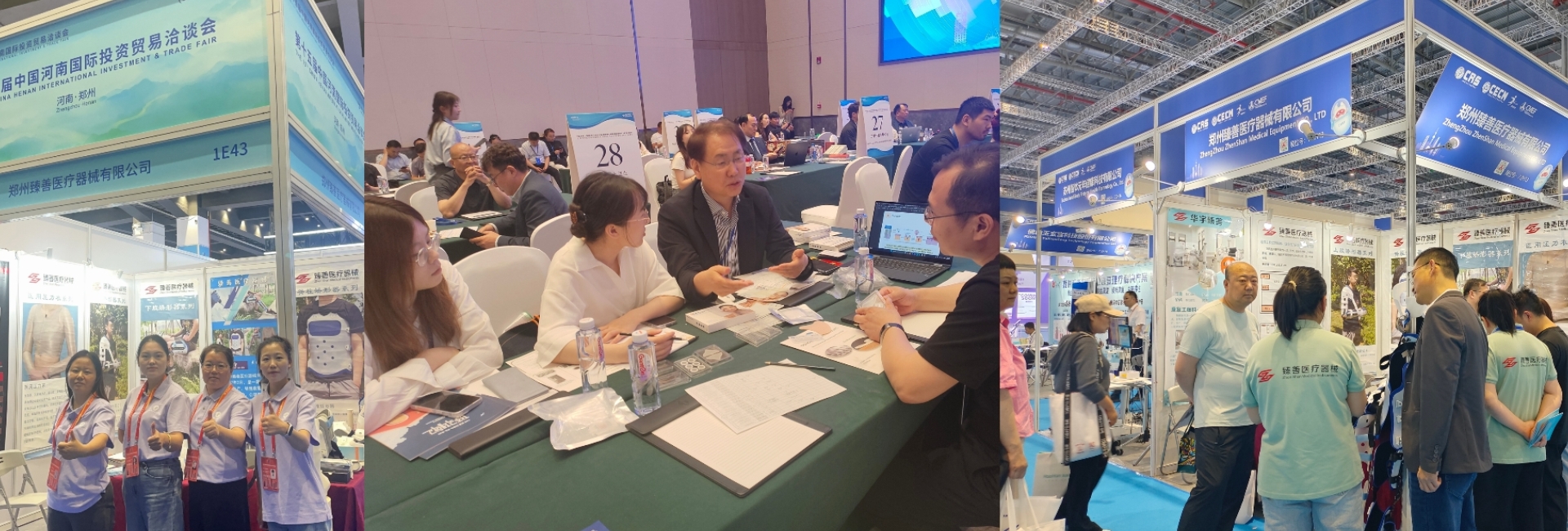
Zhengzhou Zhenshan Medical Devices Co., Ltd. mainly engages in the research and development, production, and sales of orthosis products and supporting rehabilitation auxiliary products. Its clients include medical device purchasers, rehabilitation institutions, relevant hospital departments, and channel distributors. If you need specific product models, specifications, price systems, or supply terms, it is recommended to contact relevant personnel through the channels published on the website to obtain more accurate information.
Q: Can an elbow orthosis be worn while moving?
A: This depends on the product positioning. Orthoses in the fixation and protection category are mainly intended to limit inappropriate movement and should not be used for large-range active exercise at will. If it is an adjustable mobile orthosis used during rehabilitation, the angle and range of motion should also be gradually increased according to the doctor's advice.
Q: How can I tell whether the size is suitable?
A: Base the choice mainly on measurements of arm circumference and joint length, combined with the manufacturer's size chart. During trial wearing, if the user's fingers do not feel numb, there are no obvious pressure points locally, and the fixation strap is moderately tight, the size is basically considered suitable.
Q: Will long-term wearing cause poor breathability?
A: This is related to the breathability of the product material and the inner liner design. Styles with breathable inner liners are usually more comfortable, such as those with mesh splicing or ventilation holes. However, even products with good breathability should not be worn continuously for several hours without removal, and the skin condition should be checked regularly.
The selection of an elbow orthosis should ultimately return to the core question of whether it meets the needs of the current rehabilitation stage. By clarifying your goals, understanding the product's adjustment range and support structure, and combining this with professional recommendations, you can choose a more suitable product from the many specifications available.

