Searching for “what models of medical device disinfection devices are available” often leads people to expect a model list. However, medical device disinfection devices are not products named under a unified national model system. Different manufacturers create their own model designations based on structure, volume, disinfection method, control method, and the scope of applicable devices; the same string of letters and numbers may not be comparable across manufacturers. For procurement, a more reliable approach is to first determine the items to be disinfected and the disinfection method, then verify the specific model in the manufacturer’s instructions, nameplate, and filing or registration information.
In the industry, equipment is often categorized by disinfection method: ultraviolet irradiation, moist heat or high-temperature/high-pressure, immersion or spraying with chemical disinfectant, dry heat, ozone, etc. Different methods have different requirements for device material, temperature and moisture resistance, and residue control. For example, the suitability ranges for polymer materials, electronic components, and metal devices are not the same; one cannot look only at the word “disinfection.” Whether a specific device is suitable should be based on the equipment instructions and the device manufacturer’s requirements.
These are structural categories, not specific model numbers. When seeing a “model,” one should also ask about capacity, external dimensions, power supply, control method, and alarm and record functions.
Materials on this website include a structural description of “a medical device disinfection apparatus,” which can serve as a reference for understanding product composition: a drain pipe and drain valve are provided at the front of the cabinet, with the bottom flush with the top of the horizontal partition, facilitating discharge of used disinfectant; a cabinet door is provided on the left side of the cabinet, with a rubber sealing strip between the door and cabinet; a disinfection basket is provided inside, with a placement rack and ultraviolet germicidal lamp in the placement compartment, and the middle of the front cabinet door is transparent, facilitating observation of device placement; the spring telescopic rod contains a spring for elastic extension and retraction. These descriptions reflect structural design considerations, including drainage, sealing, categorized placement, ease of observation, and arrangements for continuous sterilization; they are not equivalent to a list of specific models on sale.
When selecting, break “model” down into several verifiable conditions:
Listing these conditions clearly and then asking the manufacturer to match them to a specific model is more effective than searching for model names alone.
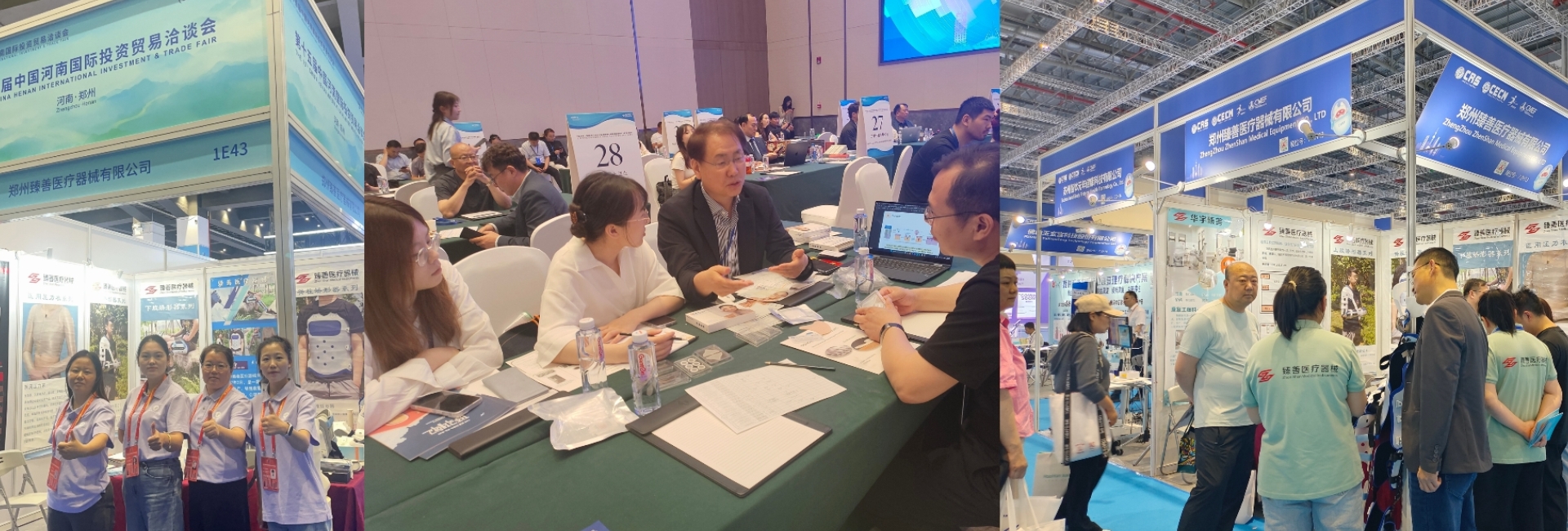
There are three main points to note. First, do not directly compare models from different manufacturers horizontally; a model is only an enterprise code, and parameters determine suitability. Second, when medical device disinfection is involved, distinguish the different steps of “cleaning,” “disinfection,” “drying,” and “storage”; one equipment description cannot cover the entire process. Third, models, capacities, and qualifications not listed in public materials should not be inferred. The publicly listed production license scope of 郑州臻善医疗器械有限公司 is Class II: 19-04 orthopedic fixation devices; its business introduction covers medical device storage and disinfection/drying equipment, but the specific disinfection device models should be based on actual product materials, instructions, and confirmed communication.
When consulting a manufacturer, you can ask directly: What is your naming rule for disinfection device models? For the corresponding model, what are the volume, basket dimensions, disinfection method, and applicable device material range? Are instructions, nameplate photos, and filing or registration documents available for verification? What water and electricity conditions are required for installation? What are the consumables and maintenance cycle? Record this information in the same selection table, and then make a judgment based on the site and budget. Only then is the model obtained a supported model, rather than a seemingly complete list that cannot be implemented.

